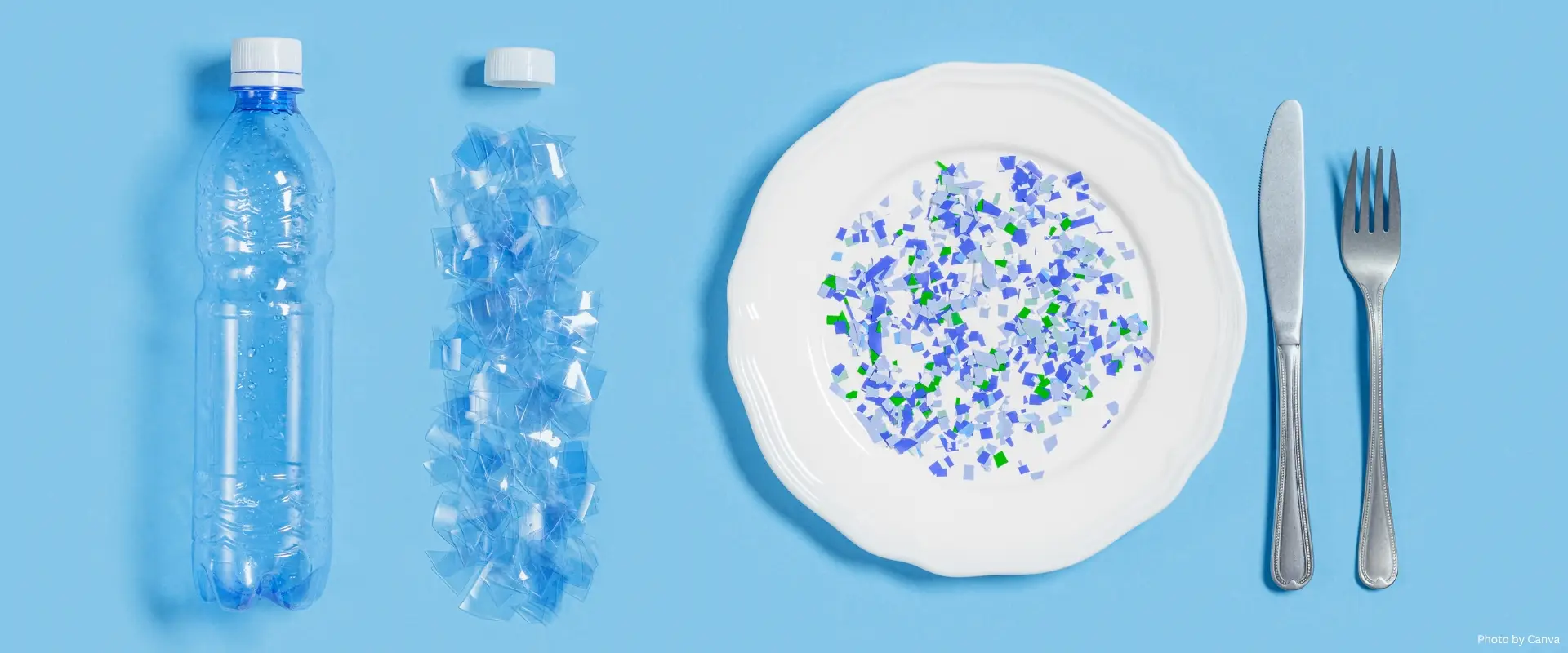
In the quest for human optimization, we often focus on the variables we can quantify: the macronutrients on our plates, the weight on the bar, and the precise liters of water we consume to maintain cellular hydration. However, in 2026, a silent and microscopic intruder has fundamentally redefined the landscape of human health. Microplastics and their even more elusive, smaller cousins, nanoplastics, are no longer just "ocean problems" or environmental talking points. They have officially become systemic biological guests.
Recent breakthroughs in analytical chemistry and medical imaging have confirmed what researchers have long suspected: the "plastic age" has moved inside us. For the H2Goals community, understanding the mechanics of this biological breach is not an exercise in fearmongering, but the first step in defending your physiological performance.
Micro vs. Nano
To protect your biology, you must first understand the scale of the adversary. Not all plastic particles are created equal, and their size dictates their ability to cause harm.
Microplastics (MPs): These are fragments smaller than 5mm. Traditionally, we believed the human gut acted as a sufficient filter for these larger pieces, but we now know that mechanical abrasion from these particles can damage the intestinal lining, leading to localized inflammation.
Nanoplastics (NPs): These are the true "ghosts" of the plastic world, measuring smaller than 1 micrometer. Because of their size, they do not just sit in the digestive tract; they possess the ability to achieve cellular translocation. This means they can slip through the gaps in our defenses and enter the cells themselves.
In April 2026, the United States Environmental Protection Agency (EPA) took a historic step by adding microplastics to the Contaminant Candidate List 6 (CCL 6). This designation marks a shift in global health policy, recognizing that these particles are no longer just "litter"—they are prioritized drinking water contaminants that require rigorous monitoring and regulation.
The Three Great Barriers
The human body is an expertly designed fortress with sophisticated "border controls" intended to keep toxins out. However, 2026 research has shown that nanoplastics are the ultimate trespassers, bypassing these defenses with alarming efficiency.
1. The Intestinal Frontier and the Bloodstream
The journey usually begins in the gut. When we consume water from contaminated sources or food wrapped in degrading polymers, microplastics interact with the intestinal mucosa. Smaller nanoplastics are able to penetrate the intestinal epithelium, entering the circulatory system.
Once in the bloodstream, these particles use your circulatory system as a high-speed highway to reach every major organ. Studies published in Frontiers in Cell and Developmental Biology (2026) have identified plastic particles in the liver, kidneys, and even heart tissue. This systemic distribution means the "plastic load" is not localized; it is a whole-body burden that affects metabolic efficiency.
2. The Blood-Brain Barrier (BBB): The Cognitive Threat
Perhaps the most concerning discovery of the mid-2020s is the ability of polystyrene nanoplastics to cross the blood-brain barrier. The BBB is a highly selective semipermeable border that protects the brain from circulating toxins while allowing vital nutrients to pass.
New 2026 models suggest that nanoplastics disrupt tight junction proteins like claudin-5. By "poking holes" in the brain’s primary defense, these particles can trigger neuroinflammation and oxidative stress. This is a major concern for the H2Goals community, as cognitive clarity and neural speed are the cornerstones of high performance. When the brain is busy fighting off microscopic intruders, it has less energy for deep work and complex problem-solving.
3. The Placental Barrier: The Generational Impact
The most sacred barrier in the human body is the placenta, designed to provide a pristine environment for a developing fetus. However, clinical research from PubMed has confirmed the presence of microplastics in placental tissue and even the first stools of newborns (meconium).
This "pre-pollution" suggests that the plastic burden is being passed down, potentially altering fetal neurodevelopment and interfering with the endocrine system before a child is even born. Understanding this helps us realize that our current habits are not just about our own performance—they are about the biological legacy we leave behind.
The Trojan Horse Effect
The physical presence of a plastic particle is only half the story. Microplastics act as a "Trojan Horse" for a variety of toxic "hitchhikers" known as Endocrine Disrupting Chemicals (EDCs).
When you drink from a low-quality plastic bottle, the particle itself is a vessel. On its surface, it carries additives such as Bisphenol-A (BPA), phthalates, and PFAS (the "forever chemicals"). These chemicals are not always chemically bound to the plastic; they "leach" into your tissues upon contact.
Hormonal Mimicry: EDCs are molecular mimics. They are shaped similarly to natural hormones like estrogen and testosterone. They bind to your receptors and send false signals, which can lead to hormonal imbalances, reduced fertility, and disrupted thyroid function.
Metabolic Sabotage: These disruptions are now being linked to "obesogen" effects. Research in Environmental Endocrinology (2026) suggests that plastic-associated chemicals can interfere with adipose tissue function, potentially contributing to weight gain and insulin resistance even in individuals with disciplined diets.
Oxidative Stress: The primary mechanism of plastic-induced damage is the generation of Reactive Oxygen Species (ROS). This creates a state of internal "rusting," where cellular structures are damaged faster than they can be repaired.
Defending Your Performance: The H2Goals Blueprint
While it is impossible to live in a "zero-plastic" world in 2026, you can significantly reduce your internal plastic load with targeted, science-based habits. At H2Goals, we believe in proactive defense.
1. Advanced Hydration Infrastructure
Since drinking water is a primary vector for microplastic ingestion, your filtration system is your first line of defense.
Reverse Osmosis (RO): In 2026, RO remains the gold standard. These systems utilize semi-permeable membranes that can filter out particles as small as nanoplastics.
Distillation: This process mimics the natural water cycle, leaving plastic particles behind as the water turns to steam and is re-condensed.
Inert Materials: Transition all "performance vessels" to glass, high-grade stainless steel, or ceramic. Never drink from a plastic bottle that has been exposed to high heat (like sitting in a hot car), as heat exponentially increases chemical leaching.
2. Culinary Defense and Household Hygiene
The Non-Stick Trap: Traditional non-stick pans shed thousands of microplastics and PFAS into your food with every scrape. Switch to cast iron, carbon steel, or high-quality ceramic.
Ditch Microwave Plastic: Never microwave food in plastic containers, even those labeled "microwave safe." The high heat causes the plastic to break down at a microscopic level, dumping nanoplastics directly into your meal.
Dust Management: Believe it or not, a large portion of microplastic exposure comes from inhaling household dust (mostly shed from synthetic carpets and clothing). Use HEPA-certified vacuums and air purifiers to keep your air as clean as your water.
3. Biological Support and Detoxification
While the body does not have a dedicated "plastic-clearance" organ, you can support the systems that manage the oxidative stress caused by these particles.
Sulforaphane and Glutathione: Found in cruciferous vegetables like broccoli sprouts, sulforaphane boosts the body’s natural antioxidant defenses, helping to neutralize the ROS generated by plastic particles.
Intestinal Barrier Support: A robust gut microbiome and a diet high in prebiotic fiber strengthen the intestinal lining, making it harder for particles to achieve translocation into the bloodstream.
The Path Forward
The news isn't all grim. In early 2026, the Department of Health and Human Services (HHS), in collaboration with the EPA, launched the STOMP initiative (Systematic Targeting of MicroPlastics). This $144 million program is the first of its kind, designed specifically to develop clinical tools for measuring and potentially removing nanoplastics from the human body.
Furthermore, we are seeing a massive surge in biopolymer technology; plastics made from seaweed and fungi that break down into harmless organic matter rather than persistent micro-fragments.
For the high-performer, the goal is mitigation and resilience. By securing your "inner frontier" and choosing habits that prioritize biological purity, you ensure that your human hardware remains optimized for the long game. The truth about microplastics is that they are everywhere, but they don't have to be in control of your health.