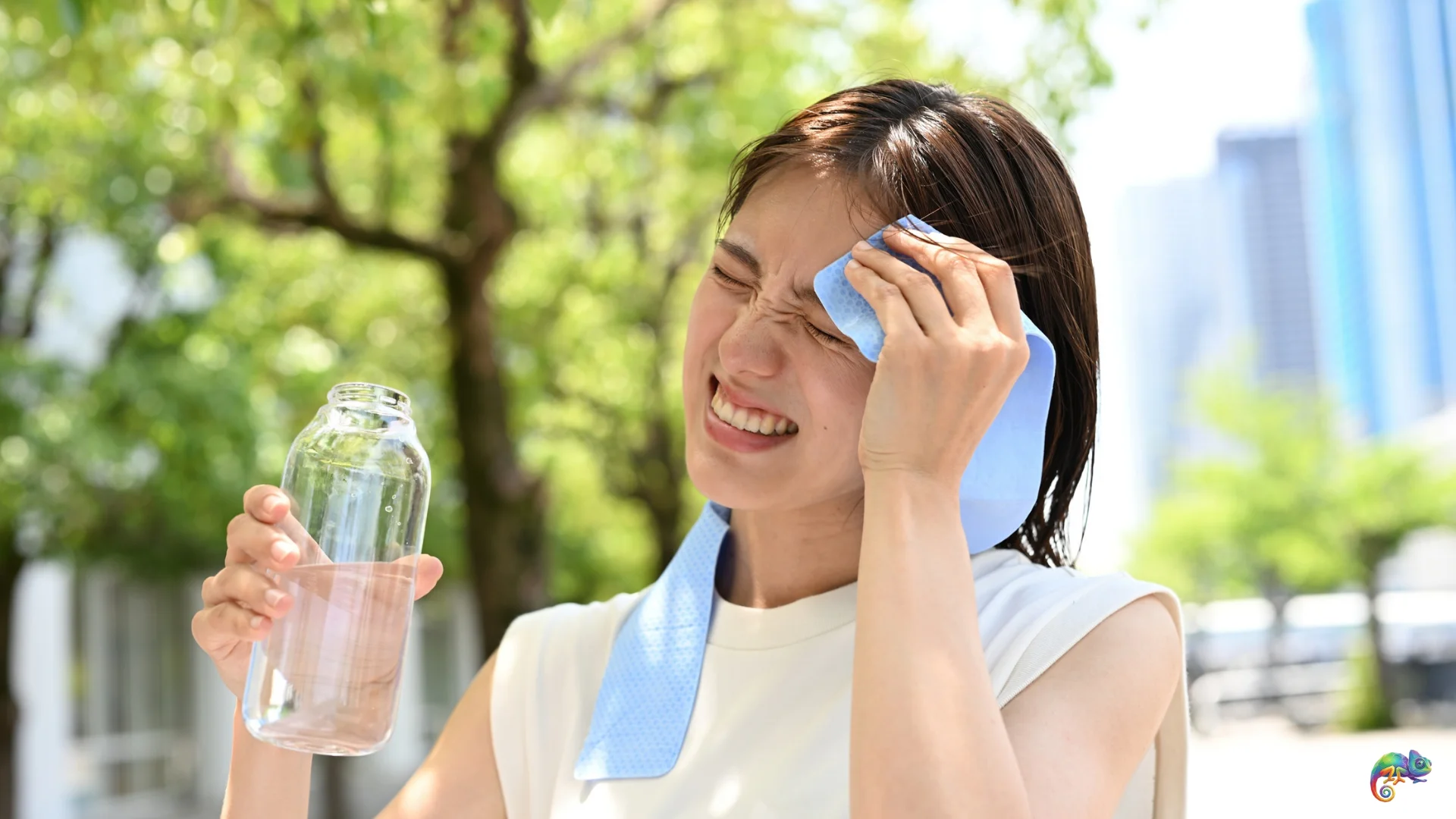
The temperature on your phone was taken in the shade. It came from an instrument sitting inside a louvered white box, shielded from the sun, a few feet above a patch of grass. That is a good way to describe air. It is a poor way to describe what happens to a person running through that air at two in the afternoon in August.
On August 1, the University Interscholastic League, which governs high school athletics in Texas, stopped treating the difference as a rounding error. Schools are now required, not merely encouraged, to run outdoor practices off wet bulb globe temperature readings taken on the field itself. Marching band is included. The measure had been a recommendation for three years. In June the UIL board voted to make it a standard, and the official policy now spells out exactly what happens at each reading.
Most people reading this do not coach teenagers in Texas. Read it anyway. What Texas published is the plainest, most usable heat guidance available in the country right now, and nothing stops you from applying it to your own afternoon.
Two numbers, two different questions
The heat index answers a narrow question: how hot does the air feel to a person standing still, in the shade, doing nothing. WBGT answers a harder one: how much trouble does a working body have dumping heat in the conditions that actually exist outside, sun and all.
The formula is public and the weighting is the whole story. Seventy percent of a WBGT reading comes from the wet bulb, which is essentially a humidity measurement. Twenty percent comes from a black globe thermometer sitting in direct sunlight. Ten percent comes from ordinary air temperature. Ten. The number that organizes most people's training decisions is the smallest term in the equation, and the Korey Stringer Institute at UConn has been saying so for years to an audience that was mostly athletic trainers.
This is why a 30 degree Celsius day at 81 percent humidity can punish an athlete harder than a 40 degree day at 36 percent. Sweat that drips off you is doing no cooling work at all. It cools only when it evaporates, and saturated air will not take it. The heat index limitations people run into are not a matter of the number being slightly off. It is measuring a different situation than the one you are in.
Jimmy Fowler, a National Weather Service meteorologist quoted by Texas Public Radio when the rule took effect, put the flaw in seven words: "it's assuming you are in the shade."
What Texas actually put in writing
The UIL chart is graduated. Below 82 degrees WBGT in most of the state, practice runs normally, up to three hours. From 82 to 86.9, teams must take at least three four minute breaks per hour and have a rapid cooling zone available. From 87 to 90, practice caps at two hours and football players are stripped down to helmet, shoulder pads, and shorts. From 90.1 to 92, one hour maximum, no football equipment at all, and a mandatory 20 minute rest. Above 92.1, outdoor practice is cancelled or moved inside.
Readings have to be taken within 15 minutes before practice starts and rechecked every half hour, because a reading from the morning tells you nothing about four in the afternoon. West Texas and the Panhandle operate on a lower trigger, 79.7 degrees, because athletes there are less acclimatized to humidity.
Every school also has to keep equipment capable of full body ice water immersion on hand. Not ice packs. A tub.
Jamey Harrison, the UIL's executive director, called the approach "the national gold standard for keeping kids safe when working in the heat." Rebecca Stearns, chief operating officer at the Korey Stringer Institute, told Sports Illustrated that with Texas on board, "53% of high school student-athletes will now benefit from this protocol," up from 42 percent before.
Steal the chart
You are not a sophomore in pads. But if a state will not permit a padded 16 year old to practice at a given reading, and that same state will not allow any equipment above 90, you have been handed a usable ceiling for your own outdoor training in extreme heat. Consumer WBGT meters exist for the price of a decent water bottle, and National Weather Service forecast offices publish WBGT forecasts for much of the country.
The second thing to copy is structural rather than numerical. The UIL rule is not a hydration mandate. It is a work to rest ratio with unlimited fluid during the rest. Three or four forced stops an hour, water available without limit, no activity during the break. That sequencing matters more than total ounces consumed. Drinking a liter in the parking lot afterward does not undo two uninterrupted hours in the sun. We have written before about how the deficit you carry overnight bleeds into the next day's session, and heat waves make that compounding worse, not better. During the western heat event that peaked on August 8 and 9, overnight lows across parts of the Mojave stayed between 80 and 95 degrees. There was no recovery window. Morning started in the hole.
The response plan matters as much as the prevention plan
The immersion requirement is the piece most recreational athletes have never thought about. According to the Korey Stringer Institute, exertional heat stroke has had a 100 percent survival rate in cases where whole body cold water immersion or aggressive dousing began within ten minutes of collapse. The treatment target is a core temperature drop starting inside 30 minutes, and the institute is blunt that oral, ear, armpit, and forehead thermometers are not accurate for an athlete exercising in heat and should never be used to assess one.
That survival figure is not a randomized trial. It comes from case series of athletes who were correctly diagnosed and cooled fast. Read it as evidence that speed is decisive, not as evidence that heat stroke is survivable in general. Exertional heat stroke can occur in a fully hydrated athlete, which is the fact that most undercuts the popular assumption that water is the whole defense. Work rate, acclimatization, equipment, and rest structure carry more weight than fluid volume.
What the wearables can and cannot tell you
A study published in Frontiers in Physiology in January tested 23 recreationally active adults cycling in two conditions, hot and dry at 40 degrees Celsius, and hot and humid at 30 degrees. A wearable sweat sensor estimated total sweat volume accurately when checked against a scale. It underestimated sweat sodium losses by about 10 millimoles per liter against flame photometry, and a widely used online sweat rate calculator badly underestimated fluid loss in both conditions.
The practical reading: trust the gadget on how much you lost, not on what was in it. If you are chasing an electrolyte strategy, a patch test or lab measurement still beats an algorithm, a point that dovetails with our earlier look at what hydration wearables can actually detect and with the case for treating supplement form as a variable rather than a detail.
Build the ramp before you need it
A heat acclimatization period of roughly ten to fourteen days of graded exposure produces real physiological change: plasma volume rises, sweat begins earlier, and sweat sodium concentration falls. One brutal Saturday does not produce any of it. The people who get hurt in August are usually the ones returning from an air conditioned July.
None of this is settled at the federal level, and it is worth being honest about that. OSHA's proposed national heat standard, published in August 2024, is still unfinished, with a supplemental proposal now pointed at December 2026. The agency's heat National Emphasis Program expired in April with no announced renewal. Outdoor and delivery workers have no dedicated federal rule protecting them this summer. A high school marching band member in Texas currently has more legal heat protection than an adult roofing a house next door.
Which leaves the individual doing the arithmetic. Hydration during heat waves is the part everyone remembers and the part that is easiest to get right. The reading you use, the length of the session, and whether there is a tub of ice water within reach if something goes wrong are the parts that decide outcomes. Texas wrote its version down. Yours can be shorter.